

There’s something deeply wrong with us.
I don’t often do this, I don’t like to give weight to feeling like this, but this was written in rage. There is something very wrong with how we think. As a culture. I guess I was ignorant to it for much of my life. Yet now, paying attention, it is hard to unsee. And experiencing it first hand as I did upon returning home last night, it makes me feel ill.
I mowed the lawn yesterday. Well kind of.
Since May, I have stopped my father from mowing the lawn. I tried before that, earlier this year, last spring and summer, but finally in May a few weeks after the most recent cut-back I blocked his path to the mower and jumped onto the train of increased media posts calling for “No Mow May”. Feeling audacious, I took it a step further and asked to abide by David Attenborough’s plea to leave lawns across the UK to grow from May to the end of July, for birds and insects to finish their breeding seasons and flowers to set their seeds.
“The grass will be WILD by then. We won’t be able to cut it, it’s completely impractical.”
This was my dad’s reply. I explained my reasons once again: that we will be supporting wildlife to survive this season, and hopefully thrive; that a balanced ecosystem will help our vegetable patch as we invite in pollinators and natural slug controls - frogs, birds, perhaps even a hedgehog; that the UK is in desperate need of more wild spaces for wildlife, and that gardens in England make up an area four times larger than our Natural Nature Reserves; that we can play a part in returning life to butterflies, bees, field mice, frogs and birds. We have a role to play, a responsibility to this ecosystem.
While everywhere else we have taken away the habitats of wildlife and insects, broken food chains, and stripped sanctuaries needed to shelter, hide and breed, at least here in our own back garden we have the power to choose to do… nothing.
To leave habitats to naturally reestablish. To look out at beautiful wild flowers and tall mixed grasses burgeoning with life. To welcome fellow non-human beings back into our company, to wave goodbye to species isolation as we reintegrate into a community of life. And thrive as it thrives.
Still I met resistance: “We can’t change the world with our garden son. And what’s going to happen when it's all overgrown, who’s going to cut it?”
I would. (No one, I wanted to say, but I swallowed that thought). And so the deal was made - we would allow it to grow, untouched for 3 months, and then I would cut it back in August.
And then, as she always would, August arrived.
I’d been dreading it. Why couldn’t we just let it grow?! I’d sat in the tall garden grass, amongst the feathery tops and mustardy wild flowers. The air around me hummed, vibrated, sound shimmering beside me against me - I heard a chorus of crickets, watched as two different butterflies settled on a nearby Buddleja (butterfly bush). And I felt the soft long grass under my feet, glistening wet with dew, cushioning the tread of my toes. How could I break the serenity, harmony, rightness of this place? Rightness - that’s how it felt - it felt correct. To share this land, human and non-human together. It’s the least we might do after taking their lands and calling them our own.
Colonisers. Spanish, Dutch, British, Human. The same patterns repeat themselves, take a place and call it “mine”. Disregard what might have been before, what might be there now, and the futures that are at stake.
And yet, we had agreed. But… but what if I could find an ideological middle. What if I could give some order, practicality and tidiness to the garden whilst mostly maintaining the newly established ecosystems. And what if I could make it look more beautiful than a fully trimmed lawn ever could. In many ways this was, in fact, a microcosm of how I saw myself acting in the future - to make change and shift narratives by shaping our present realities, showing people an alternative which, while still messy and imperfect, could hopefully be a step towards a world more kind, caring and just.
And so, I made a start on cutting back, lawnmower set to low (leaving the grass fairly long - a burr cut). I knew that to succeed here was to find the middle ground. As much as I wanted to, I couldn’t be too idealistic, stubborn or “extreme”. If I was, I knew what would happen - I would come back to a freshly mown lawn in its entirety. No wildflowers. No meadow. No ecosystem. No life.
I gritted my teeth and trimmed a central path, and around the shed, and down towards and around the vegetable patch.
It felt terrible. I wished I’d used a scythe instead. This jungle for insects, oasis for frogs, feeding ground for birds, haven for pollinators was slowly being destroyed as the lawnmower’s swirling blades hacked it all down. I stopped when I saw a family of tiny frogs the size of my fingernail hopping out of the way of the churning machine, out from their hideout in the tall grass and onto a bare patch of cut lawn. Suddenly exposed, threatened, they sought out a new home. I watched as they retreated towards the bush next to the pond and disappeared into the thicket - I hoped that others would do the same. I couldn’t bear to think of less fortunate frogs ending up under the sharp blades. I knew that they had only come, perhaps even survived, because the grasses had been left to grow. It felt traitorous to now take that away. To give and then take with life so frivolously. Playing God.
But I knew what would happen if I didn’t continue. No long grass. No habitat. So I continued painstakingly, desperate to make this work. As I cut down homes I left space for new ones - designated areas of meadow, safe havens that, I hoped, would be left to be wild and flourish, to host life and invite a community back into our own lives.
I finished up in the late afternoon. I looked at my work, wiped my brow and smiled. To me it was beautiful. The trimmed paths accentuated the long flowing “meadow”, bringing attention to its vivacity. A happy middle ground, I thought.
I thought wrong.
With rosy eyes I had looked at the lawn, ignoring the reality, allowing it to flutter away on the backs of dragonfly wings skimming over feather-tipped grasses. I thought that by showing how beautiful it could be, I would be able to convince my dad to leave it as it was, meadow and trimmed lawn side by side. Apparently beauty is subjective, and narratives are bloody stubborn.
I explained to my dad that I was done with the lawn, that I planned to leave it in this design, and why. I showed him a video of the family of frogs hopping away as I had been mowing. We argued.
“If I see all this mess it’ll drive me mad! I can’t live like this.”
I had forgotten the pervasive need of our culture to exert control over nature, the necessity to squash what is wild, the perverse desire for order. I had overlooked the very “British” obsession with tidiness, its self-policing nature, the intrinsic social competitiveness of it all. The well kept, freshly mown lawn, a symbol of the moral person, the good citizen, with community values. The tidy lawn of the Englishman that beats his wife then whistles while chopping that grass and trimming those edges and smiling gayly to his neighbours. The well-managed lawn of the social climber, recently promoted to the middle class and intent on remaining there. They leave the blossoming vegetable patch, flowers, leaves and herbs with uses their grandparents used to know, leave that all behind and greedily claim the status-serving sterility of the 1-inch-grass. Human slaves to the real ruling elite, green blades sitting comfortably in their dearly sprayed, watered and trimmed thrones. The ecological mirror held to a societal monoculture. Who domesticated whom?
I went to play football and when I came back the rest of the lawn had been cut.
It’s only a lawn, it’s not that big of a deal - why are you getting so upset?
I guess I’m so upset by this because it feels like I’ve lost control. In a world where everything feels out of control already, I guess I had hoped that I could influence what happened in my own back garden. I dream of a world rewilded, a world of recognition for all life and our interdependence. But what hope is there when I can’t even bring about some change at home. All of a sudden I feel powerless, but this was never just about power. No. Voiceless. I feel unheard. Pleas ignored by the government? I’m used to that. But at home it is harder to swallow. I think again to the chorus of crickets, the croaking of frogs and the buzz of the bumblebee in the garden. Voices loud and proud and unheard. Deliberately ignored. Or violently silenced.
I understand that this all probably sounds very dramatic, but that is how I feel. When someone I love, someone that only wants the best for me, wants me to be happy, disregards something that I care deeply about, it hurts.
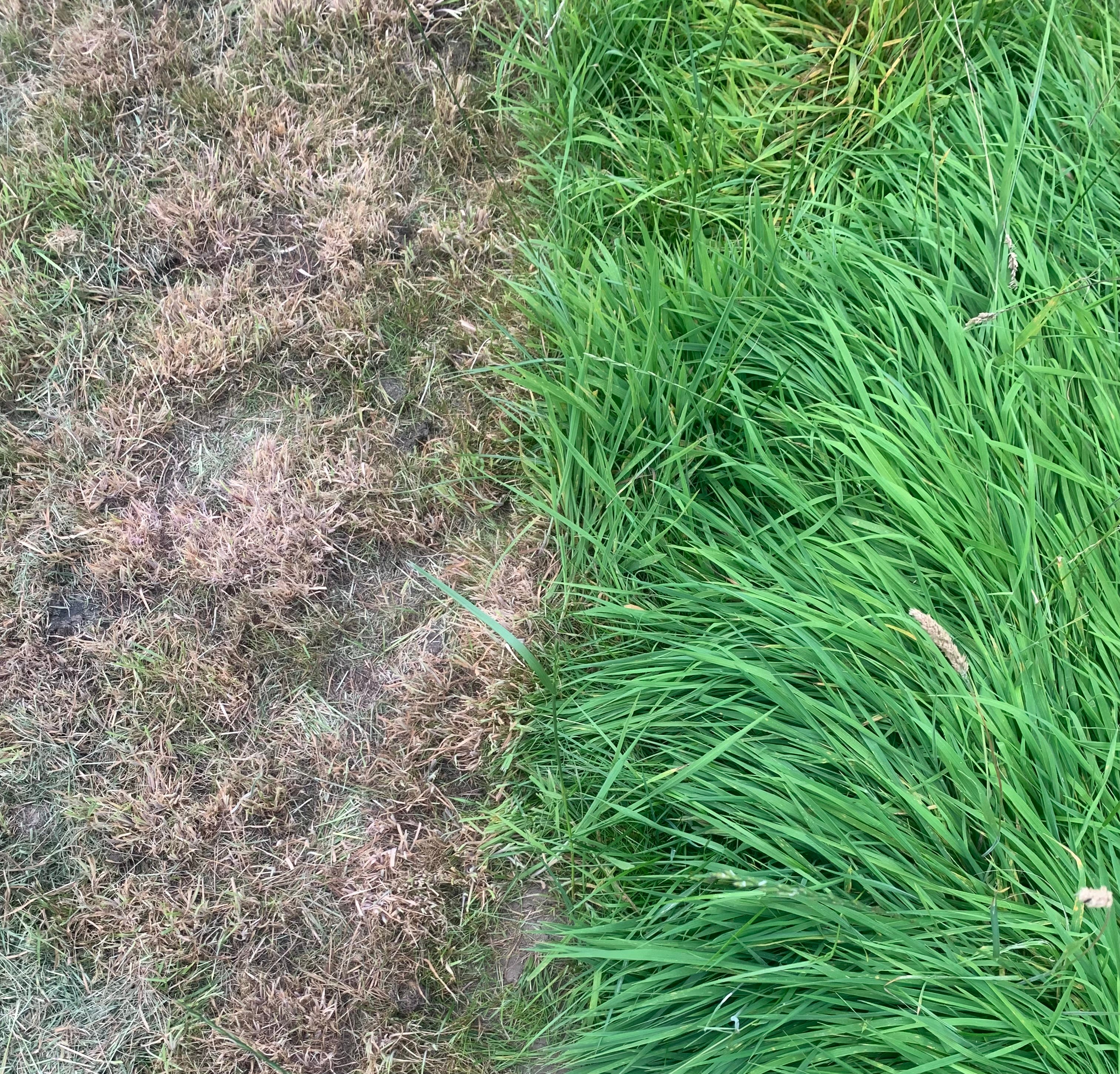
I sit now and look out at a wasteland. I hear and see an absence. There are no crickets and their chorus, no butterflies, dragonflies, bees or wasps weaving through tall grass. The birds seem awfully quiet. The clouds are grey. The sun is icy as it dimly lights the day. A day in mourning, it seems to me. The growl of cars passing on surrounding roads engulfs the silence. Straight roads surrounding neatly cut lines of lawn. A desert. What was full of life just yesterday is now barren.
Two butterflies settle on the grass in front of me. Admirals, I think. Their deep red and brown wings brushed with white are easy to see perched on the strewn remnants of mowed grass. This will all have looked very different to them yesterday. But they come anyway. And rest down on the grass. And flutter their wings. And carry on.
Beautifully articulated Keshav! These conversations are happening all across the country in homes and councils - some we win, some we loose! " And&With" not "either/or" is a great guiding principle. Maybe the "middle ground" has to start with a smaller area? The frogs and butterflies will be grateful for whatever you can reserve for them.